
Christianity Explained
✝
✝
1. Authenticity of the Bible


Witnesses / Miracles
Tens of thousands of people saw Jesus perform godly miracles. He claimed he was God and that he created the universe. The bible is not the main source of this claim. The bible was written to churches which already existed from Jesus and his apostles traveling around teaching and performing miracles. Before the Bible was written It was also documented by the Romans what these people believed as well as torturing and killing them for saying they believe they saw jesus perform miracles and come back from the dead. They left their religions and faced death because Jesus showed them he's God. There are no archaeological or historical records of a message being contrary to what has been preserved.
Other witnesses include group sightings of millions seeing Mary in heaven and other healings. See Miracles.
The Bibles History / Prophecies
"There is no body of ancient literature in the world which enjoys such a wealth of good textual attestation as the new testament"
-F.F Bruce
The Bible Was composed by at least 40 authors, on multiple continents who never knew each other, over a span of 1,500 years. They wrote duplicate prophecies which Jesus fulfilled:
All Early Manuscripts
1st century Papyrus Scroll Manuscripts
It is not possible for the Church to have changed the Bible because long before Romes canonization of it, we still have to this day the original copies which were circulated around the continent (Rome, Egypt, Syria, Asia Minor.) They were translated into different languages, all which line up with Christianities traditions. Texts were also being copied in private sermons and letters. On top of that with persecuted Christianity, independent communities and no central organized Church, it's impossible. The later Church which didn't exist at the time would have had to seize thousands and thousands of previous manuscripts, replace them with edited copies in different languages, and somehow shut up the thousands upon thousands of Christians who were maintaining the traditions of Jesus and the apostles. It's simply Illogical and impossible.
Christianity exploded immediately after the resurrection before anything was written. So besides the bible, the other strong testimony is the people of the time who abandoned their religion and culture (which was a very serious thing for them to do,) all for Jesus who came back from the dead. Most of whom faced execution for stating what they believe.
Besides that, copies of the Old Testament are preserved dating back to 700 B.C.E which prophesy the coming of Jesus and his New Covenant of sacrifice. See salvation.
Longest manuscripts:
200 ad Papyrus 66 - Wikipedia - John
175–225 A.D / 300-400 A.D Papyrus 75 - John 1:1–15:8, Luke 3:18–24:53
2nd century Papyrus 98 - Revelation
125 A.D Papyrus P52 - John 18:31-33 King of Jews
More:
Papyrus 46 (c. 175–225 AD)
Contains letters of Paul (Romans, Corinthians, Hebrews, etc.)
Papyrus 45 (3rd century)
Portions of the Gospels and Acts
Papyrus 47 (3rd century)
Another early witness to Revelation
Papyrus 72 (3rd–4th century)
Includes 1–2 Peter and Jude
Old Latin Bible (2nd–3rd century)
Peshitta (2nd century roots)
Coptic Bible (2nd–3rd century)
Writers before canonization quoted the New Testament extensively:
Ignatius of Antioch (c.70 AD)
Polycarp (110 A.D)
Justin Martyr (c. 150 AD)
Irenaeus (c. 180 AD)
Tertullian (c. 200 AD)
Origen (3rd century)
50 A.D and later
https://www.earlychristianwritings.com/churchfathers.html
https://aquinasonline.com/texts/
More information on the Papyri:
Dishna Papers - Wikipedia
The Earliest New Testament Manuscripts – Bible Archaeology Report
Other Sources
1st–2nd century Christian inscriptions and symbols
short burial inscriptions, graffiti, prayers, or symbols. Together they show very early beliefs about Jesus as Lord or Son of God, resurrection and eternal life, baptism, salvation, Christian identity, and worship of Christ; one of the earliest Christian symbols was the fish, and the Greek word ΙΧΘΥΣ (Ichthys) became an acronym for “Jesus Christ, Son of God, Savior”; many early inscriptions from graves and catacombs in Rome contain phrases like “in Christ,” “peace,” “he lives with God,” or references to resurrection, reflecting hope after death, believers united with Christ, and expectation of eternal life; the Alexamenos Graffito (probably 2nd century) is one of the earliest known depictions connected to Christianity and mocks a Christian named Alexamenos worshipping a crucified figure with a donkey’s head, with the inscription roughly saying, “Alexamenos worships his god.”
Writings of Rome and historians
(Note: He was brutally tortured mangled crucified by Romans who were experts at execution. It would not be possible to survive in a coma in those days without life support especially after crucifixion. Coma patients need oxygen airway support and other medical care. Pericardial effusion after the soldier stabbed his heart with a spear confirms death. 500 people saw him come back from the dead 3 days later, and Christianity became huge with people abandoning Judaism which was very dear to them and serious to leave.)
Pliny the Younger 112 A.D.
They were in the habit of meeting on a certain fixed day before it was light, when they sang in alternate verses a hymn to Christ, as to a god, and bound themselves by a solemn oath, not to any wicked deeds, but never to commit any fraud, theft or adultery, never to falsify their word, nor deny a trust when they should be called upon to deliver it up; after which it was their custom to separate, and then reassemble to partake of food – but food of an ordinary and innocent kind.
Lucian 125-180 A.D
The Christians ... worship a man to this day – the distinguished personage who introduced their novel rites, and was crucified on that account.... [It] was impressed on them by their original lawgiver that they are all brothers, from the moment that they are converted, and deny the gods of Greece, and worship the crucified sage, and live after his laws.
Josephus 93 A.D.
Jesus was a wise man
he performed surprising deeds (or was known for them)
Mara Bar-Serapion in 73 A.D.
“What benefit did the Athenians obtain by putting Socrates to death? Famine and plague came upon them as judgment for their crime. Or, the people of Samos for burning Pythagoras? In one moment their country was covered with sand. Or the Jews by murdering their wise king? … After that their kingdom was abolished. God rightly avenged these men … The wise king … Lived on in the teachings he enacted.” – (A Letter of Mara, Son of Serapion)
The Roman historian and senator Tacitus referred to Jesus, his execution by Pontius Pilate, and the existence of early Christians in Rome in his final work, Annals (written c. AD 116), book 15, chapter 44.
Suetonius 120 A.D writes about events in 49-64 A.D
Life of Claudius 25.4:
“Since the Jews constantly made disturbances at the instigation of Chrestus, he expelled them from Rome.”
Life of Nero 16.2:
“Punishment was inflicted on the Christians, a class of men given to a new and mischievous superstition.”
More:
https://en.wikipedia.org/wiki/Sources_for_the_historicity_of_Jesus
https://en.wikipedia.org/wiki/Talmud Babylonian Talmud A.D. 70-200
Other points to consider
• The Crucifixion was prophesied before crucifixion had been invented.
• No archeological evidence against the story of Jesus.
• Show any story where so many people died for a lie. The later church was also under persecution.
• If you were going to fake a story you would never use women to affirm it in those times.
• The apostles who were all Jews had no reason to fake a story that would excommunicate themselves from their religious community and become persecuted the rest of their lives and eventually killed for believing in the resurrection.
• Undesigned coincidences as quoted in Wikipedia is said to have occurred when an account of one event in the Bible omits a piece or pieces of information which is filled in, seemingly coincidentally, by a different recording, which helps to answer inquiries raised by the first. According to this approach, undesigned coincidences often occur when one account forgoes a reason for an action which is given by a different account (which often does not mention that action). In this case, so the argument goes, there was a complex unified story both authors are writing down despite gathering data from different witnesses.
• Scientists confirm during window time of the Earthquake at the Crucifixion.
Matthew 28:2
2 There was a violent earthquake, for an angel of the Lord came down from heaven and, going to the tomb, rolled back the stone and sat on it.
Matthew 27:51
51 At that moment the curtain of the temple was torn in two from top to bottom. The earth shook, the rocks split
The Dead Sea Scrolls
(Old Testament)
408 BC to 318 BC.
The Dead Sea Scrolls mostly resemble the Old Testament and John from the New Testament of the Bible.
Joshua 1:8
8 Keep this Book of the Law always on your lips; meditate on it day and night, so that you may be careful to do everything written in it. Then you will be prosperous and successful.

The Great four Unicedes Codices
The New Testament was written between 40-70 AD. The earliest full written copies we have today date between 330 and 350 AD.
Egypt and Moses
Rabbinic Judaism calculated moses lifespan as 1391–1271 BCE.
proto-Sinaitic script 15th to the 19th century BC. Moses and first five books of the Bible.
The Seti War Relief (ca. 1279–1291 BC) depicts the road, Horus Way, as well a number of fortresses, including “Tjaru,” the staging point for Egyptian campaigns into Canaan. A vertical waterway labeled “the dividing waters” is visible.
The Soleb inscription 1500 B.C Area in Canaan inhabited by nomadic people who worshipped the god Yahweh. Since the Pharaoh of the Exodus had never heard of the God Yahweh, this suggests that the Exodus should be dated no later than ca. 1400 BC because Pharaoh Amenhotep III had clearly heard about Yahweh in ca. 1400 BC.
The most important discovery related to Moses and the Exodus is the Merneptah Stele. In ca. 1208 BC Pharaoh Merneptah erected a 10-foot tall victory monument in a temple at Thebes to boast of his claims of victory in both Libya and Canaan. The Merneptah Stele is evidence that the Exodus from Egypt, led by Moses, took place in the 15th century BC as the biblical data indicates.
This concludes that the people of Israel were slaves in Egypt at the time the Bible indicates. Further, the archaeological data suggests that the Israelites left suddenly and were settled in Canaan by the end of the 15th century BC.
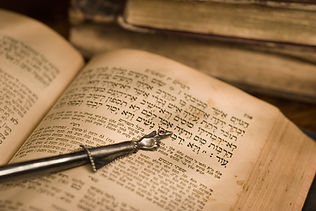
The Bologna Torah Scroll (ca1225–1155 CE) is the world's oldest complete extant Torah scroll. The scroll contains the full text of the five Books of Moses in Hebrew.


The Genesis Creation Story
How did the Bible authors know the Universe really started from nothing and didn't always exist? In alignment with the big bang theory.
The Great Flood
We don't know with impirical evidence that the earth is young or old. The reason for this is because if there was a global flood, water saturation would cause influx of extra daughter elements in rocks. So, if there was or wasn't a flood, the same results will show as we see in the world today.
People have no problem accepting the fact that Mars had a global flood but reject the idea of earth's global flood even though there is more evidence:
The fountains of the great deep.
Genesis 7:11
That day all the fountains of the great deep burst forth.
How did Bible know the rupture of the fountains of the deep and scars the Ocean floor exist?

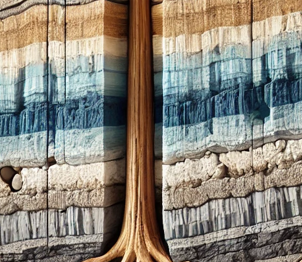
Global Sediment Layers
These layers are the size of continents.
If the layers were millions of years old they would have erosion decay and not be perfectly flat. If there were rivers in them there would be trenches and dips. Its impossible for Polystrate trees to stay in between the layers through millions of years without decay. This disproves the age of the layers, and shows they happened wave after wave immediately.
Fossils
• Marine animals fossilized in the middle of the continents.
• Millions of animals fossilized before they died. In the process of flying, eating, giving birth.
• Living cells and decomposing dinosaur flesh found in horns, elastic soft tissue not bone. Putrefication. Collagen can't last that long.
• Dinosaurs are not 100 million years old.
• All types of Animals we have today were found fossilized with Dinosaurs. (Where is the evolution?)

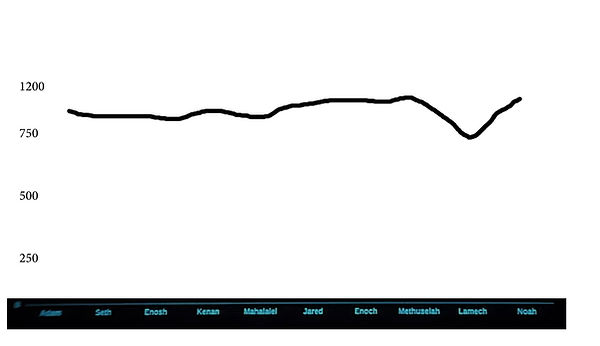
Age decrease with exponential decay curve
The map of the age decrease rate with an exponential decay curve given in the Bible is too exact for someone to have made up in those times with their current biological mathematical and technological knowledge.

Pre-flood Lifespan
Post-flood Lifespan
Philosophy

Causation / Contingency
Everything we observe in the universe appears to have an explanation in terms of prior conditions or underlying laws, indicating that things are contingent—dependent on something beyond themselves for their existence. Anything that comes into existence operates within a framework of laws, structures, and mathematical regularities. Nothing in the universe is the ultimate source of its own existence or behavior—that is, nothing is fully self-explanatory. Even if something were to arise without prior causes in the ordinary sense, it would still presuppose a framework in which such an event is possible—such as the universe—and would therefore remain contingent rather than self-explanatory.
The fine-tuning of physical constants, such as those governing stellar formation and cosmic expansion, suggests that the conditions necessary for structure and life are highly constrained. Given that the universe exhibits intricate mathematical order and follows consistent laws, it is argued that it, like everything it contains, would also require an explanation and may be contingent on something beyond itself.
An infinite regress of contingent explanations does not ultimately explain why anything exists at all. Therefore, it is argued that there must exist a necessary reality that does not depend on anything else for its existence—often identified in classical theism as God.
An eternal being can never be proven, which is why we put our faith and trust in Jesus when he said he's God and created everything.
Gradation / Ontological argument
Everything has gradation, things can be hotter, colder, good or more good, and it all has its source. So goodness can only come from something that is all good. Everything tends toward good, which implies a supremely good source. Humans naturally desire perfect happiness, but nothing finite can satisfy this fully. This points to a perfect being, God, as the ultimate fulfillment.
If we can imagine an all good all powerful being in our mind, the even greater thought would be for it to exist in reality.
Morality
It's due to the worldview Athiests argue for as to why there are atrocities. No higher being to answer to, no consequences, no right or wrong. If the entire world was faithful Christian loving God and holiness as he has set the standards for, there would be no crime. Reason and morality only make sense if God exists. If thoughts are products of blind processes, truth is accidental yet we trust logic, math, and necessary truths.
Objective moral obligation (“ought”) cannot arise from matter alone.
Gods Standard
Man has a natural law written in his heart. If God really did create everything, he created your conscience, so whatever feels bad or good to you, that's god creating it and setting the standard of good and bad. Your conscience isn't arbitrary, it reflects Gods design. When you feel something, that's God showing up in your consciousness.
Sin
Sin is like breaking a law written into the very fabric of existence. Just as there are laws of physics and dimensions beyond our senses that govern the universe, there are moral and spiritual laws that govern the soul. Even seemingly small sins though we don't realize it darken the soul and separate us from God, because God is all good and created the universe according to His perfect order. By choosing sin, we move away from that order and the life it intends for us.
Proof
God doesn't want to leave undeniable proof of his existence, because that makes people feel forced and lack free will. He wants to be discovered by the evolution of our conscience and our being transformed to want to be aligned with his light, which is the true beauty of life. Doubt which something many saints have purifies faith. So he's left bread crumbs of evidence for us pointing us in the right direction, the most being the revelation of his human form Jesus, astounding miracles of the Church, etc. All backed by scholars some even atheist affirming that these people really believed these things happened to the point it that takes more faith to not believe in God than to believe.